
Dr. Hent Cecília Vargáné
crisis intervention psychologist
Specialty
I believe that in order to be able to make a meaningful contribution to a client, an assisting person must follow a long path of self-knowledge because his or her own personality is his or her most important working tool. That is exactly what I intend to do, and to continue to develop alongside the professional knowledge acquired. As a first-time career starter, I was enthusiastically open to more assistive methods, which, in addition to the useful experience, taught me the ability to select properly. I have been lucky to learn from excellent professional mentors, to whom I am grateful. I can now say that my areas of interest are primarily clinical psychology and various psychotherapeutic methods, the effectiveness of which has been demonstrated. I believe in the outcome of well-selected assistive devices, the credible use of methods to retain borders, but most importantly the strength of the healing relationship that has developed between the therapist/advisor and his client.
I have been valued in all areas of work: In child protection, the ability to accept unconditionally and to retain others in a stable manner. In oncopsychology, a reinterpretation of purpose, nuances in the concept of pain, respect for struggle and a grip of hope. The uniqueness of the mourn during the mourning process. When working with parents of children with metabolic disorders, a deeper understanding of the primary ties, cleansing of the fear and immeasurable respect for the dedicating parents. The importance of clarity from the judicial field. And from the educational arenas to the future, as I see every year that there are very valuable and motivated pupils in schools in Hungary.
I am a psychologist and wife, but my most important role in my life is to become a mother. My greatest values, the products and the wonders of my life are my children, who teach and push to the right on a daily basis.
The values described above are the cornerstones of the Mental Health Centre, on the basis of which we continued to build with my husband in full support of our joint ventures. I am delighted that we can now help in three cities. We consider it a priority to work with organisations working to help others. We are keen to support parents with multiple children who cannot give their children everything they want. Whether it’s a drug subsidy, schooling, helping a kit of babies when they are born, or a psycho-educational programme. The Mental Health Centre Foundation is responsible for the coordination and coordination of the work grants.
Studies
2004-2008 | Grand Lajos High School of the Order of Cistercians of Pécs
2008-2012 Institute of Psychology, | University of Pécs, Degree in behavioural analysis (BA)
2012-2013 Institute for Physical Education and Sport of | University of Pécs: qualified as a sports coach with a tennis discipline
2014-2016, University of | Szeged, Institute of Psychology: Specialising in consultancy and school psychology (MA)
October 2015 | The Grief Recovery Institute, Los Angeles, Sherman Oaks, California, Grief Recovery Specialist
January 2016 – | Hungarian Family Therapy Association, Budapest: family therapy method-specific training, family therapist candidate
June 2016 | Dairy Processing Method® Hungary: mourning Processing Method Specialist, Budapest
October 2016-June 2017 | Hungarian Relation and Simbolic Therapy Association: autogeneous Training Exercise Manager
2024-2026 | Institute of Psychology, Pázmány Péter Catholic University: Training as a specialist psychologist in crisis intervention
Work experience
2013 Nov.- 2014 Aug. | Pécs Children’s Home: trainee psychologist, educator, child protection assistant, family caregiver
September 2016 – September 2019 | Albert Szent Györgyi Clinical Centre, Department of Oncology and Oncology of the Surgery and Allergology Clinic, University of Szeged, psychologist
May 2018 – | Nestlé Hungary, psychologist
September 2018— | Faculty of Law and Law, University of Szeged, Primary and Judicial Mediator (mediator), trainer
September 2019 – | South Great Plain Regional Research Association, psychologist
2018-October 2019 | Szeged Tribunal: Management of time and stress management training
March 2023 – | care – Professional manager, Mental Health Centre
September 2023 | Balaton Clinic, Managing Director, Psychologist
Publications
Róbert Járai – Krisztina Csókási – Szabina Büki – Csilla Hent Cecília: Domestic adaptation of the multidimensional interceptive awareness scale, Applied Psychology 2016, 16(1):123-134.
Sarungi Emőke- Hent Cecília- Osváth Viola: Crisis prevention and management – The practice of psychology, Tünde Polonyi, Kálmán Abari, Tamás Kiss (2020) ISBN:9786155981197 pp. 301-322

Dr. Edina Gyulai
lawyer, family lawyer, mediator, supervisor
Contact: + 3630/604-0046
Specialty
Child rights/child protection expert, family law lawyer, health-enhancing mental health hygienic, ethnographic, senior mediator, educator, family therapist in training, supervision. For more than 25 years, I have been working in the field of child protection, including in the system of child welfare services and specialised child protection services in the context of personal care in various roles and functions (preventive probation, family caregiver, on-call mediation coordinator consultant, legal adviser, street social coordinator, foster parent consultant). I am a university lecturer in the specialised further training of SZTE family law lawyers, vocational training of nursery school and school psychologists, training of general and judicial mediators (here as head of the theoretical and practical training part of mediation in the field of child protection). I work as a mediator trainer, head of further training courses, regional specialist in child protection mediation, head of supervisions, and the number of continuously handled cases among Hungarian mediators is particularly high. I am a member of several professional organisations (Hungarian Family Therapy Association, Hungarian Academy of Sciences Szeged Academic Committee Legal Sciences Committee Legal Psychology Working Committee, National Mediation Association: Educational Conflicts Task Force, Hungarian Society of Supervisors and Coachs, UNICEF MBA Children’s Rights NGO Coalition. I regularly publish lectures, round tables, workshops, child protection, mediation and other topics. As a member of the Board of the National Mediation Association, I have a prominent role in the work of the Association in the field of school conflict mediation, as head of the South Great Plain School Mediation Task Force of the OME. I was particularly involved in the development of the domestic mediation system in the child protection and court area (court mediation coordinator). Further develop, extend and configure my research area, specific intensive mediation techniques for conflict situations within the family and between people, to specific areas of child protection. Expansion and coordination of different conflict resolution systems, specialised and basic services.
My services: family and adolescent mediation, legal advice in particular on matters involving family law and child protection, contact, the design and conduct of mental health processes, family and party therapy, individual, group and team supervision, organisational development trainings, trainings.
Studies
1995 | Gyula Juhász Teacher Training College/Szeged/, Hungarian specialist teacher-training manager (diploma issued on 17.6.1995, diploma No: 817/1995, diploma qualification: excellent)
1996 | JATE/Szeged/Faculty of Humanities, specialisation in ethnography (diploma issued on 22.6.1996, diploma No 337/1996, degree certificate: excellent)
1997 | József Kőrösy Technical Secondary School for Economics and Foreign Trade – qualification as computer operator with identification number 47 1 3139 13 9 003
2001 | Relations Foundation, adopted by the Ministry of Public Administration and Justice No 24/2001 Relationship Mediator Training- Relationship Mediator
2002 | National Institute for Family and Social Policy Course Course Course Course Preparation for Family Recreational Operation No CSN-17/2002
2003 | Ludus Bureau No 50/2003 XXV/1/166/2000 OM 1222./65/2001 Further training in autism
2005 Connection Foundation No S-05-106/2004, adolescent Mediation Training – Camera Mediation Mediator, adopted by the | Ministry of Public Administration and Justice
2005 | National Institute for Family and Social Policy Tt.XLI-963/2005.Tereptanary course training course- Tereptanar
2007 | University of Social Sciences and Law, Faculty of Law (diploma issued on 8.7.2007, diploma No 205/2007, serial number of the diploma form: PT B/BL 000258, Institution ID:FI62198, Diploma qualification: cum laude)
2011 | Link adopted by the Ministry of Public Administration and Justice 2000 Psychology Bt., S-05-051/2009 Mediation training course ‘Skills and maintenance’
2011 | Hungarian Family Therapy Association Basic Family Therapy Course position No 2011/19/KMi.
2012 | Hungarian Family Therapy Association 50 hours of Family Therapy Supervision training with position No 2012/15/KMi/50
2012 | SZTE Faculty of Health Sciences and Social Training Department of Social Work and Social Policy T- 06-022/2009 – Further training course on children’s drawings
2015 | Training course ‘TÁMOP-2.2.2-12/1-2012-0001 Project ‘Development of the content and methodology of the vocational guidance system’ – Career guidance consultant and user of the National Career Guidance Portal’ – Career guidance consultant
2015 | Hungarian Family Therapy Association 150 hours of self-knowledge training with position No 2014/13/BM/150
2015 | Hungarian Family Therapy Association 50 hours of Family Therapy Supervision training with position number 2015/13/KVD/50/Bp
2017 | SzTE Gyula Juhász Teacher Training College, Institute of Applied Health Sciences and Health Promotion, Mental Hygiene for Health Promotion (diploma issued in: 2017. 01. 12, diploma No: JGYPK-00002/2017/OKL, diploma form serial number: PT D004664, Institution ID: FI62198 Diploma qualification: notable)
2017 | LL.M, Faculty of Political Science and Law, Faculty of Family Law (2.6.2017)
2017 | SZTE Faculty of State and Law, specialising in family law (diploma issued in: 2017.06. 02.. Diploma No: ÁJTK-00031/2017/OKL, diploma form serial number: PT F054001, Institution ID: FI62198 Diploma qualification: notable)
2020 | CSBO (Family-friendly Országos Nonprofit Közhasznú Kft.) Vocational training of senior officer No SzPk-00209-17-02 4 03 3 – Senior officer
2021 | Hungarian Family Therapy Association 2019/36/ÁA-IG/80/Szeged 80-hour Family Therapy Supervision Training
2022 | School of Psychology, Faculty of Humanities and Social Sciences, Károli Gáspár Reformed University, graduated from the Institute of Psychology (year of graduation: 21/06/2022, diploma No: SzV-322/2022, diploma form serial number: P82 C011099, Institution ID: FI44189 Diploma qualification: honoured)
Work experience
Szent Ágota Child Protection Service (2023-), foster care advisor
Lecturer, Department of Labour and Social Rights, Faculty of Law and Law, University of Szeged (since 2016)
Lecturer at the Institute of Psychology, Faculty of Humanities, University of Szeged (since 2015)
Lecturer at the Institute of Civic Sciences, Faculty of State and Law, University of Szeged (since 2014)
Szegedi Törvényszék (Szeged Regional Court), Szeged Regional Court, Multipurpose Association of Small Regions of Szeged, Unified Social Institution (Tabán Family Assistance Community House, Child Welfare Centre and South Great Plain Regional Family Assistance Service Methodology Group) on the basis of a 3-page agreement of the Rézler Gyula Mediation Institute (31 May 2013 – 1 December 2014)
SAC Judicial Liaison Mediation Coordinator for the Pilot Mediation Programme at Szeged Municipal Court (2009-2010)
Mediator for Family Law, Golden Midway Association (2006-2014)
Individual Mediator (since 2003)
Field teacher, Faculty of Health Sciences and Social Training, University of Szeged (1999-01)
The Crèches and Child Welfare Centre of the Municipality of Szeged is the Centre for Family and Child Welfare (continuous since 1997): guard patron, educator, family caregiver, contact mediator coordinator, adolescent mediator, legal counsel, street social coordinator, contact on-call/contact mediator advisor
Publications
András Krémer-Gyulai Edina: School guard and possible alternatives. Part 2 Issues raised. Family law 2022. 1. P. 7-14
András Krémer-Gyulai Edina: School guard and possible alternatives. Part 1 Issues raised. Family law 2022. 1. P. 21-29.
Edina Gyulai: Face-to-face and online mediation in the practice of on-call contact during a pandemic. Family law 2021. 1. P. 45-52.
Edina Gyulai: OME Communication, School Conflicts, School Mediation. Summary of the National Mediation Association’s online roundtable (2020: 07. 25.)
Edina Gyulai: A case conference or a meeting between children’s rights and the dashboard. Family law 2020. 2. P. 30-36.
Post-pandemic mediation, the way forward and what lessons to learn (2020 06. 27.)
What will happen to us if the mask is removed (2020: 06. 27.)
Back to the suli, but how? Dr Edina Gyulai, Szeged expert, was shaken (04/06/2020)
Presentation of the health-promoting mental health function of the adolescent partner or the adolescent medication at the Szeged Centre for Family and Child Welfare in the light of a case study – (2017)
Resilience in everyday life: resilience is a life style or: the role of the “puzzle strategy” in the lives of professionals working with and in the protection of children, in: Improving knowledge and skills on children’s rights to protect children (edited by: Andrea Hegedűs), Institute of Civil Sciences, Institute of the Faculty of State and Law, Institute of Civil Sciences, Department of Labour and Social Law, Szeged, 2018. Pp. 354-399 – E-handbook (IDEA Project 2017-2019) Documentation (2020. 06. 27.)
Resilience in everyday life: resilience is a life style or: the role of the “puzzle strategy” in the lives of professionals working with and in child protection (resilience development, ventilated casework module) (2020) 06. 27.)
Resilience in everyday life: resilience is a life style or: draft text of the presentation on the role of the “puzzle strategy” in the life of professionals working with and in the protection of children (resilience development, ventilated casework module) -IDEA project training material Documentation (2020. 06. 27.)
Resilience in everyday life: resilience is a life style or: the role of the “puzzle strategy” in the lives of professionals working with and in the protection of children, in: Leaflet for participants in the training of the IDEA project, University of Szeged, Szeged, 2018. P. 7 – leaflet Documentation (2020. 06. 27.)
Family- and individual-focused private mediation system – script (2014,2015)
Human-centred private mediation system – Text (2013)
Human-centric private mediators – Conflict resolution procedure – script (2011)
Evaluation of the pilot judicial mediation programme 2009/2010 in Hungary- member Documentation (2020.06. 27.)
Szeged sub-summary section of the Judicial Experimental Mediation Programme – script (2009)
Contact service in Szeged, In: Child Protection Good Practice Programme, 10 Years of Child Protection Act – Good Practice Tender (2007)

Nelli Fischer
qualified psychologist (MA), employed health psychologist – operational registration number: 2543, candidate psychotherapist
Specialty
My heart is nurturing the mental well-being of healthcare workers and support workers, because in my experience it is precisely the people who make the most of their environment (family, friends, workplace...) who need support most. That is why I am lucky to have experienced how to accompany many psychological healing processes, be it job difficulties, family problems, grievances and loss experiences, stress management, self-awareness, the transmission of psychological skills and knowledge, and the maintenance of healthy behaviour.
And as an employed health psychologist, I attach great importance in my work to health promotion and the fight against diseases, with healthy personality traits at the heart of my attention. Furthermore, I have often been confronted with a request for assistance when the treating doctor referred my patient to me for psychological reasons, as our psychological difficulties sometimes occur in the form of physical symptoms, in which case revealing psychological background factors may be a step forward in the recovery.
I also provided advice in English because of my work with foreign students, which prompted me to graduate as a specialist translator – an interpreter – so I have a solid linguistic basis to provide English-speaking foreign citizens with psychological assistance. I have thus acquired valuable knowledge of the functioning of different religions and cultures through numerous clients of religions and nationalities with the help of English.
Studies
BA in Behavioural Analysis 2016 – University of Szeged, Faculty of Humanities, Institute of Psychology
2017. Training in autogenous Tréning relaxation Tréner – Hungarian Association for Relation and Simbolic Therapy
Graduated in psychology (MA) in cognitive and neuropsychology – University of Szeged, Faculty of Humanities, Institute of Psychology
2018-2024. Meditation – Imagination (symbol therapist) method-specific training – Hungarian Association for Relation and Simbolic Therapy
2021. Specialisation in applied health psychology – University of Szeged, Albert Györgyi Faculty of Medicine and Humanities, Institute of Psychology
2021. Degree in translation and interpreting for medical and health sciences, English – Hungarian, University of Szeged, Szent – Albert Györgyi Faculty of Medicine
2021 – year of candidate psychotherapist’s order: 2025. University of Szeged, Saint – Albert Györgyi Faculty of Medicine, Psychiatric Clinic
Work experience
2018-2021 SZTE ÁOK – Institute of Behavioural Sciences – Education, supply of medical students
2018-21 Mandatory practices at bedside and outpatient settings
education: basic psychological concepts/medical communication exercise guides and examinations
(2019-22), Mental health at work, stress performance at work.
2021. Development of a mental health protection programme for SZTE employees
2021-2024. University Institute of Family Medicine and Regulator – Medical students and university
worker care, education
2021-2024 psychotherapeutic care, Psychiatric Clinic (24 months)
2023. Cooperation with MESZK, burnout prevention sessions for healthcare workers
2024 – Apprentice, STECF, Institute of Psychology, Department of Personality, Clinical and Health Psychology
Publications
2021. 06. 15. Mental health programme for the staff of the University of Szeged (prepared by: Dr Katalin Barabás, Fischer Nelli, Eszter Rács, Dr Rafael Beatrix, Stankovic Mona, Dr Annamária Töreki)
Fischer, N., Rács, E. (2022). Psychological care of medical students. In: Psychologists in patient care: applied health psychology studies and case reports. ISBN 978-963-306-846-5, https://acta.bibl.u-szeged.hu/74389/

Annabella Sasvári
qualified psychologist (MA), sports psychologist
Contact:
+36 30 451 4272
bella.sasvári@gmail.com
Specialty
Competitive sport has been an integral part of my life since my childhood. The experience I have gained here has already set out the path I would like to continue my studies where I can combine sport and a professional facilitator.
In sport, especially in competitive sport, in addition to physical training, technical and tactical training, it is important that the athlete is mentally prepared. This is important because in many cases it is this variable that represents the difference in the outcome of a test or even in development.
In my work, I work not only with athletes (hobby or competitive athletes) and teams, but also with coaches and associative professionals who want to develop, as well as with sports parents in very specific situations.
In addition, there is a growing demand for sports psychology support from professionals in professions where top performance is key to their work, such as musicians, actors and managers.
Areas of sports psychology work, non-exhaustive list:
- improving mental performance
- mental training
- self-awareness work
- life difficulties
- power anxiety
- motivation base, performance motivation
- target setting
- self-confidence, self-efficiency
- development of concentration
- crisis intervention
- recovery from injury
- career planning
- closing of sports careers
- conflicts with coach, companions
Studies
2020 | Training as a mediator (vocational training as a mediator), Gyula Juhász Teacher Training Faculty, University of Szeged
2017-2019 | Vocational Training in Sport Psychology – Sport Psychologist, Department of Psychology and Sport Psychology, University of Physical Education
2016-2017 | Practice manager in autogenic training, Hungarian Association for Relation and Simbolic Therapy
2014-2016 | MA course in psychology – qualified psychologist (specialisation in clinical and health psychology), Faculty of Humanities, University of Szeged
2011-2014 | BA in Psychology – Behavioural Analyst, Faculty of Humanities, University of Szeged
Work experience
June 2013 – July 2015 | With a Mentor Programme for Integration in the South Great Plain, Budapest, Agora Foundation for Social Research, Szeged, Mentor
As of September 2016, | Hódmezővásárhely Contact Centre, Chelmet Centre for Family and Child Welfare, Psychologist
As of June 2018 | Self-employed, sports psychologist
2019-2021 | Szeged University, Gyula Juhász Teacher Training Faculty, Institute of Physical Education and Sports Sciences, Lecturer
Publications
Sasvári, A.; Harsányi, Sz.G.,ér, A., & Szemes, Á. (2019). An exploratory analysis of recreational and competitive Athletes’ superstitious habits. Cognition Brain Behavior, 23(1), 63-76.
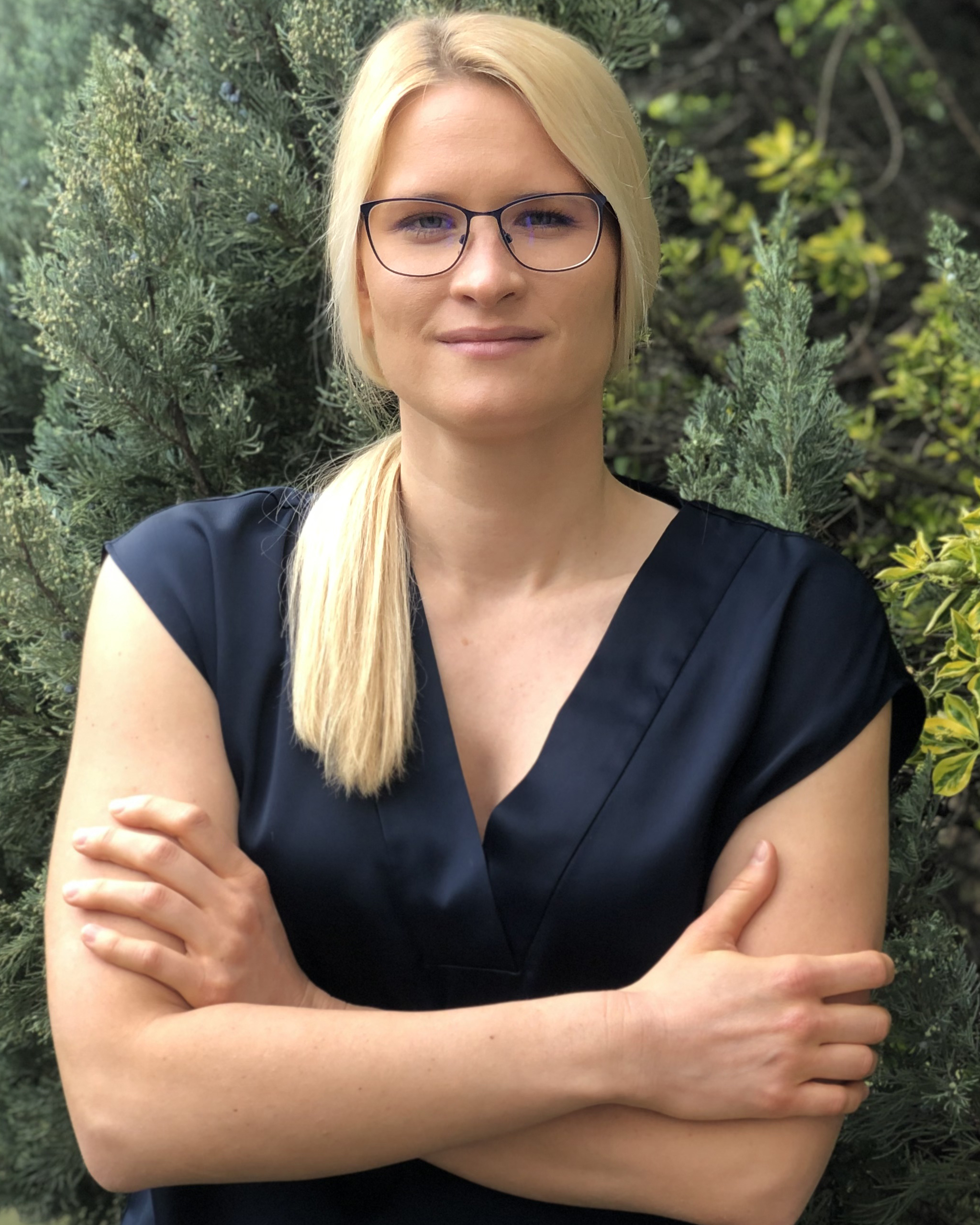
Viktória Tégely
| Budapest
qualified psychologist (MA), equine assisted self-knowledge trainer
Specialty
As a psychologist, we have a range of methodologies at our disposal to maintain an individual’s mental and related physical health or to help them overcome acute problems. Methods that involve the body alongside cognition and emotions in the process of self-awareness and that provide clients with a credible and objective mirror are always employed. This is how I found it first in my own experience and then used as a method for Equine Assisted Learning (EAL), where individuals can gain new knowledge about themselves and how they operate in new situations, through awareness-raising, during horse-based, ground-based (unnecessary prior equestrian) exercises. The method is based on the Gestalt therapeutic approach, which focuses on the process rather than the goal, and emerges from the experiences of the present. Connected to ‘here and now’, we can reach our own body feelings, feelings and thoughts, our stalemates, our outstanding needs. How do horses help us do this? They are world-leading animals that survive by detecting and reacting to their surroundings as quickly as possible. To do so, their senses have evolved on a human scale to an inconceivable fineness over the millions of years, enabling them to read the intent of predators or their conspecifics, and of course of the world’s top predators, the people. The language of the horses is non-verbal communication, i.e. an individual’s intentions or unconscious needs are inferred from his/her body language and objective feedback is provided. Due to their animal quality, they are constantly present and react without any preconception or prejudice, which greatly contributes to the feeling of unconditional acceptance and connection. On the other hand, a person’s emotional or mental reaction to a situation is often inconsistent with his or her body language. Whereas human communication is 70-80 %the inconsistent functioning of these three areas can make it very difficult to operate in everyday life, but sophisticated, clear and objective feedback from horses helps to raise awareness and bring them together. They shed light on our blind spots, contradictions, help to raise awareness and connect with our own body feelings, emotions, thoughts and needs. There is also a lot of research on reduced anxiety and stress in assisted activities already after 5-15 minutes, as well as increased levels of oxytocin, serotonin and dopamine, which act as natural antidepressants in the body. Horse breast reduces heart rate, deepens and slows down breathing, loosens muscle tone, which affects psychological function.
In my experience, there is a growing demand for methods that not only specifically address a problem at the level of verbality, but also involve the whole human being in the process. As a result, interaction with horses can very quickly bring to the surface and raise awareness of potential blockages that can be used to work in the present or even to carry forward and accelerate a psychotherapy process.
My belief is that I will bring horses and this experience-based method as close as possible to people so that they can experience how horses are tied to authentic self-reliance.
Studies
2008-2012. | degree in behaviour analysis, BA (Faculty of Humanities, University of Pécs, Institute of Psychology)
2012-2015. | degree in psychologism from the Faculty of Humanities, Institute of Psychology, Károli Gáspár University of the Reformed Faculty of MA
January 2019 – October 2019
Contact Centre for Equestrian Therapy, Kardos Edina, clinical psychologist, equestrian psychotherapist, participation in own competency-building workshops organised by equestrian psychotherapist:
- Nursing therapy in psychotherapeutic practice – practical introduction with personal experience (19-20 January 2019)
- Horses such as Tükör for the development of self-awareness. 4-5 April 2019
- Anxiety solution with horses. From the treatment of anxiety next to the horse to the treatment of anxiety disorders. 2-3 May 2019
- Family building with horses. Equestrian methodology for working with couples, parent-child relationship building, parental efficiency development. 12-13 September 2019
- Equine Assisted Team-Building Training Methodology. Cooperation, communication and problem-solving in the group. 10-11 October 2019
September 2019 – June 2020 | Loop assisted self-knowledge trainer (Nativemethod Mentoring Program)
July 2020 – November 2020 | Sports coach (Lovassport) OKJ (Kardos Lovass School)
Work experience
During loading...
Publications
During loading...